What are the solutions and procedures for addressing the heat dissipation issue of the laminating machine?
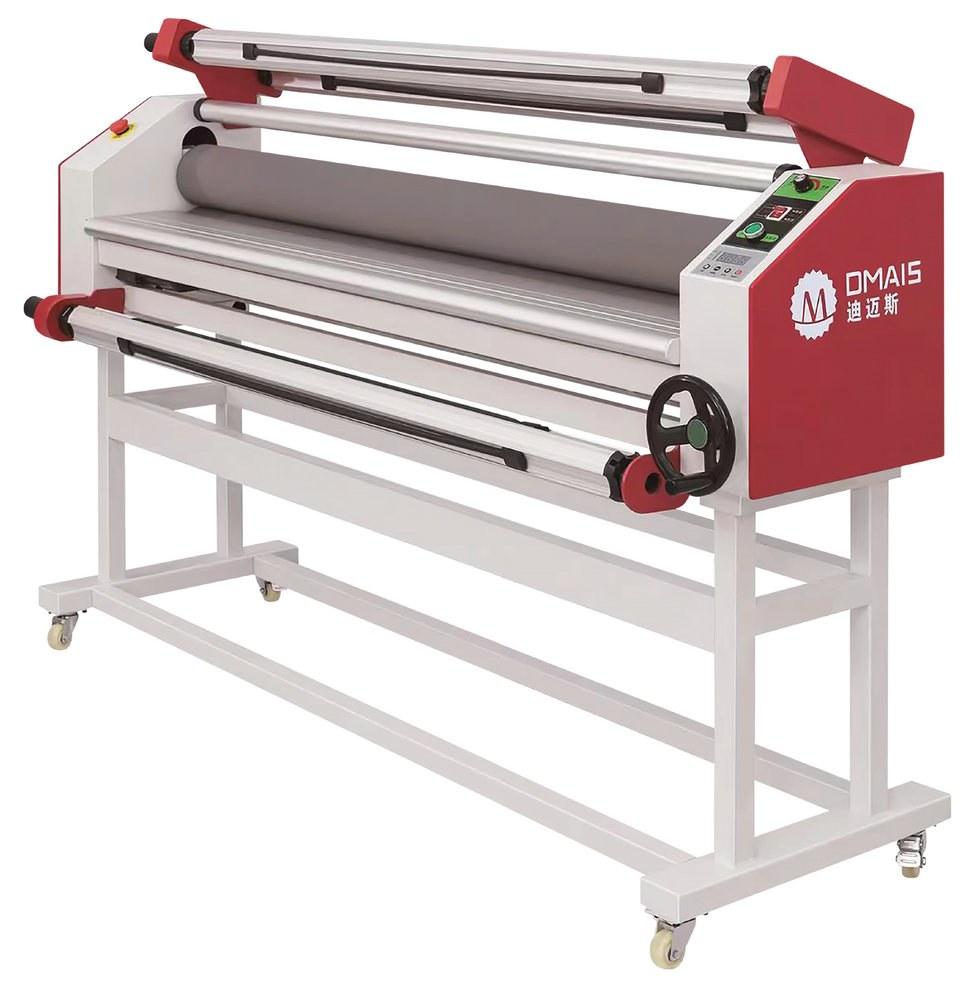
The laminating machine has high requirements for temperature control. If the temperature is too high or the heating time is too long, the film quality will deteriorate, and there will be no heating. If the temperature is too high during drying, the surface of the adhesive will form a crust, causing the film to bubble. Excessive thermal stress can also lead to the loss of elasticity of the film, resulting in performance degradation and easy tearing. In physics, there are three methods of heat dissipation: conduction, convection, and radiation. The first two methods have been eliminated, so we only need to rely on thermal radiation. Radiative heat dissipation can be unaffected by the temperature of the medium surrounding the object. As long as the object's temperature exceeds zero, it will radiate heat outwards. However, relying solely on the object's own heat radiation is very small and cannot effectively handle the heat dissipation and cooling of the object. To increase the object's heat radiation and thereby lower its temperature, a layer of heat dissipation paint can be applied to the surface of the object, greatly enhancing its heat radiation and thus lowering its temperature. Heat dissipation coatings enhance heat exchange through infrared radiation, ensuring that heat dissipation is not affected by the surrounding medium. These coatings can be applied in vacuum environments. ZS-411 radiant heat dissipation and cooling coatings not only improve heat exchange but also exhibit excellent self-cleaning, insulating, anti-corrosive, waterproof, acid and alkali resistant properties, and are easy to apply. image
