What are the common technologies of laminating machines
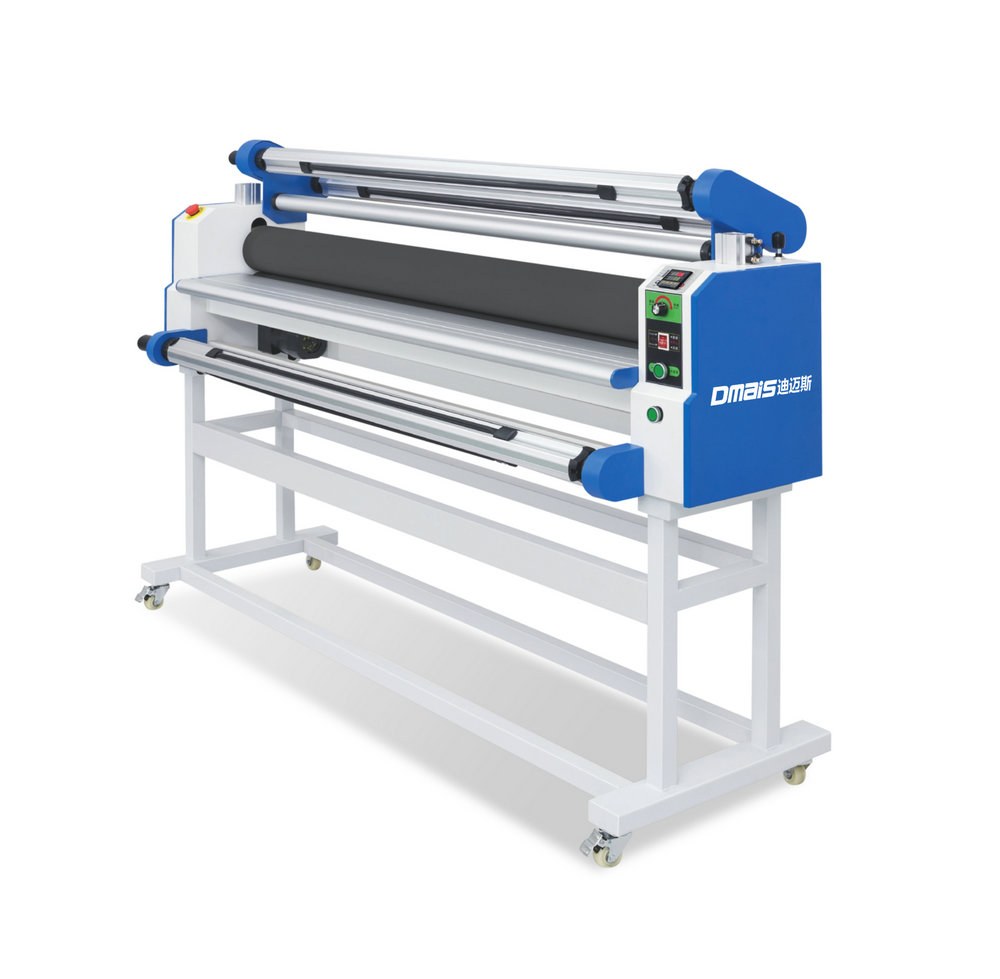
Lamination, also known as film lamination, is a processing technique where plastic film is coated with adhesive and bonded to paper prints through heating and pressing, resulting in a paper-plastic composite product. Printed materials that have undergone lamination have a smooth and glossy surface due to the addition of a thin and transparent plastic film, which enhances the glossiness and durability of the prints, making the graphics and text more vibrant and three-dimensional. At the same time, it also provides waterproof, stain-resistant, wear-resistant, fold-resistant, and chemical corrosion-resistant properties. With the development of printing technology, there are more and more process methods for laminating. According to the process of laminating, it can be divided into three types: dry, wet, and oil-based. Depending on the raw materials and equipment used, it can be divided into immediate coating laminating and pre-coated film processes. Let's briefly introduce the basic concepts and characteristics of these methods. 1. Immediately apply the coating film During the coating process, adhesive is first applied to the film, followed by hot pressing, but the production process is prone to fire hazards. 2. Pre-coated film This process greatly simplifies the laminating process as the laminating equipment does not require an adhesive heating and drying system. It is also very convenient to operate, as it can be turned on whenever needed, providing great production flexibility. Additionally, it produces no solvent odor and causes no environmental pollution. More importantly, it can completely avoid faults such as bubbles and delamination. The resulting products have extremely high transparency, presenting broad application prospects and promotion value. The pre-coated film structure consists of a substrate and an adhesive layer. The substrate is typically PET and BOPP film. Considering material cost and processing technology, most pre-coated film substrates choose BOPP film with a thickness of 12-20 microns, and the adhesive layer has a thickness of 5-15 microns. Depending on the processing equipment and process conditions, different thicknesses of adhesive layers are selected. The adhesive layer is divided into hot melt adhesive and organic polymer low-temperature resin. The difference between the two is that hot melt adhesive is made by blending and modifying several materials, including main adhesive resin, tackifier, and modifier, while organic polymer resin is a single low-temperature copolymer of high molecules. Due to limitations in skills, production equipment, and raw materials, pre-coated films (mostly of hot-melt adhesive type) produced by domestic equipment still exhibit quality defects. Because the production process relies on a similar technique to that of immediate coating films, where the adhesive is dissolved in organic solvents and applied onto the base film using a concave anilox roller, there are issues such as insufficient solvent evaporation, odor during operation and use, and the formation of bubbles on the surface after solvent evaporation during coating. Additionally, because hot-melt adhesives are blended from several polymer materials, improper temperature control during use can lead to degradation and cross-linking of the high molecular polymers within the adhesive, resulting in poor film appearance. Some pre-coated film adhesives tend to adhere to the surface of the base material, causing poor winding. Due to the thin adhesive layer and the lack of surface activation treatment, defects such as insufficient adhesion to printed materials are prone to occur. Because hot-melt adhesives are blended from several materials, the transparency of the coated film is significantly worse than that of low-temperature pure resin pre-coated films. 3. Water-based laminating It refers to the method of processing the appearance of printed materials to enhance their surface glossiness, strength, and aesthetic appeal. To evaluate the quality of laminating, factors such as brightness, strength, and adhesion should also be considered. Water-based wet laminating is favored by customers due to its high strength, ease of recycling, and pollution-free characteristics. 4. Applying a thin film on a curved surface It is a brand-new transfer printing technique that can handle workpieces with complex shapes and is suitable for different materials. Moreover, it significantly enhances the added value of products due to vivid patterns and colors. This technique involves a specially chemically treated film, which, after being printed with a specific color pattern, is laid flat on the surface of water. Leveraging the water pressure, the pattern is evenly transferred onto the surface of the product, while the covering film automatically dissolves. After cleaning and drying, a layer of transparent protective coating is applied, resulting in a visually distinct effect on the product. The laminating process can be divided into cold (cold press) laminating, hot (hot press) laminating, and liquid laminating methods according to the conditions of heat, pressure, and materials. image
